If Rugby Was Easy: A Designer’s Stitch Review
As an embroidery digitizer and product reviewer, I approach every new machine embroidery design with a healthy dose of skepticism. We have all downloaded files that look perfect on screen but turn into thread nests or distorted text once the needle hits the fabric. When evaluating the "If Rugby Was Easy Thv’d Call It Football" graphic for real-world application, my primary concern is not just the humor of the phrase, but how those specific letterforms and layout will translate into physical stitches. This review breaks down the practical realities of using this design for your craft business, personal projects, or commercial merchandise.
First Impressions and Visual Hierarchy
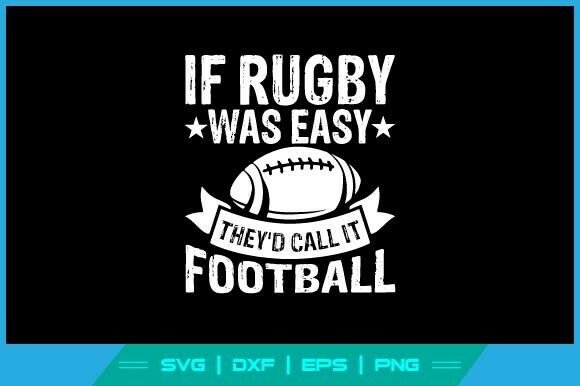
The immediate strength of "If Rugby Was Easy Thv’d Call It Football" lies in its bold, declarative nature. As a piece of Graphics intended for Crafts, it relies heavily on typography to carry the message. From a design perspective, the layout suggests a stacked or centered composition, which is generally safer for embroidery than wide, horizontal lines that can distort on curved garments. The mood is gritty and confident, appealing directly to rugby players, coaches, and fans who appreciate the sport's physical demands.
However, before you load this embroidery file into your machine, you must assess the font weight. Designs with this level of attitude often use distressed or varsity-style fonts. If the distressing involves tiny gaps or rough edges, verify that these details are large enough to survive the stitching process. In digital previews, a jagged edge looks artistic; in satin stitch, it can look like a registration error if the columns are too narrow. For this specific design, I recommend treating it as a statement piece where legibility takes precedence over intricate texture.
Real-World Application: The Custom Sweatshirt Test
To truly judge the viability of "If Rugby Was Easy Thv’d Call It Football," I mentally placed it on a heavyweight cotton sweatshirt, which is arguably the most common canvas for this type of sentiment. Rugby culture is synonymous with durable, warm apparel, making sweatshirt embroidery the ideal use case.
In this scenario, the design needs to hold its own against the fleece texture. If you are creating custom apparel for a team reunion or a boutique sports shop, the stitch density becomes critical. Fleece tends to swallow stitches, so a standard running stitch outline might disappear. You may need to increase the underlay or opt for a thicker column width to ensure the text pops. Conversely, if you are adapting this for a lighter tote bag design or a canvas apron, the same density could cause puckering. The versatility of this design depends entirely on your willingness to adjust stabilizer and tension based on the substrate.
For Etsy seller listings, this design offers excellent niche targeting. It bridges the gap between sports memorabilia and humorous lifestyle wear. However, customer trust is built on finish quality. A photo of a crisp, well-hooped sample on a textured sweatshirt will sell far better than a flat digital mockup. Buyers need to see that the humor translates to a high-quality handmade product.
Navigating Fabric Challenges and Hoop Limitations
While the sentiment is universal, the execution requires technical awareness. There are specific scenarios where "If Rugby Was Easy Thv’d Call It Football" demands caution:
- Stretchy Performance Fabrics: Modern rugby jerseys are often synthetic and stretchy. Embroidering a dense text design on these materials without proper cut-away stabilizer and adhesive spray will result in tunneling. The fabric stretches, but the thread does not, leading to a warped finished product.
- Small Hoop Sizes: If you attempt to shrink this design down for a baby bib or a sleeve cuff, check the minimum letter height. Serifs and internal counters (the holes in letters like 'a' or 'e') can close up below 6mm. Always test on scrap fabric first.
- Curved Surfaces: Placing this on a structured cap requires careful hooping. The vertical center of the design must align perfectly with the cap seam, or the text will appear crooked. Because the phrase is long, consider breaking it into two distinct lines rather than forcing a curve that distorts the baseline.
- Dark vs. Light Fabrics: High contrast is non-negotiable. White thread on navy fleece is classic rugby aesthetic. However, if using tonal threads (e.g., dark red on maroon), the visual impact diminishes significantly. Test black and white mockups to ensure the design reads clearly from a distance.
Technical Notes for Makers and Sellers
Since this product arrives as a ZIP folder containing SVG, EPS, and PN formats, you are receiving vector-based graphics rather than pre-digitized machine files like DST or PES. This distinction is vital for professional results. Vectors provide clean lines for auto-digitizing software or manual tracing, giving you total control over stitch density, pull compensation, and underlay settings.
Do not assume a one-size-fits-all approach. Use your embroidery software to customize the output:
- Verify Licensing: Before listing any finished product or selling digital embroidery file variations, confirm the commercial usage rights included with your purchase. Protecting your shop starts with respecting intellectual property.
- Optimize for Washability: Rugby gear gets dirty. Ensure your stitch type selection can withstand industrial laundering. Satin stitches wider than 7mm may snag; consider using fill stitches for larger letter bodies to improve durability.
- Mockup Strategy: When creating printable mockup images for your online store, place the design on garments that match the target demographic. A rugged, mud-splattered aesthetic fits this quote better than a pristine pastel background.
- Stabilizer Selection: For knits, always use cut-away stabilizer. For woven canvas tote bags, tear-away may suffice. Never skip the topping on high-pile fabrics like terry cloth or fleece to prevent stitches from sinking.
Elevating Product Value Through Execution
Ultimately, "If Rugby Was Easy Thv’d Call It Football" is more than just a funny saying; it is a test of your finishing skills. Whether you are producing holiday embroidery gifts for teammates, stocking a small shop with niche sports gear, or offering personalized patches, the value lies in the details. A poorly executed design cheapens the joke and reflects badly on your brand. A professionally stitched version, however, validates the customer's identity and passion for the sport.
Take the time to run a sew-out on your intended fabric. Check the back of the embroidery for excessive jump stitches or bobbin tension issues. Compare the result against your digital proof. By treating this graphic with the same rigor as a complex logo or monogram, you ensure that your embroidery project honors both the craft and the culture it represents. Practical judgment and technical preparation are what separate hobbyists from professionals in the competitive world of custom apparel decoration.